
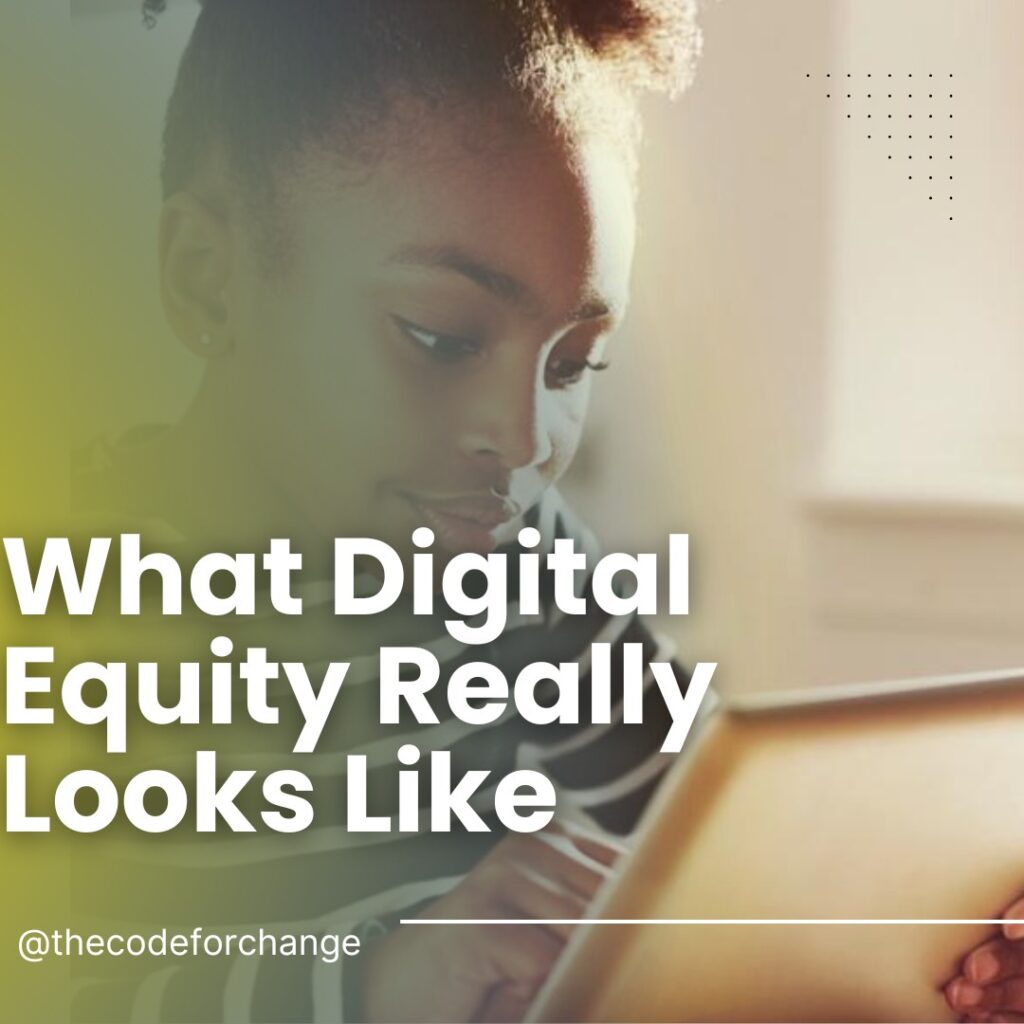
When we talk about “digital equity,” it’s easy to imagine it as a distant policy goal or a buzzword tossed around in technology and education circles. But the reality is much more personal—and far more urgent. Digital equity is about whether families can live, learn, and thrive in today’s connected world.
Unfortunately, the reality for too many households is sobering:
Parking Lot Wi-Fi
When homes don’t have reliable internet access, children complete homework in parking lots, sitting outside libraries, fast-food restaurants, or community centers just to pick up a signal. Imagine trying to focus on algebra or write an essay from the backseat of a car, long after the school day has ended.
One Device, Multiple Lives
In many households, a single device serves the entire family. That means students race to finish assignments before a sibling needs the laptop, or before a parent logs in to apply for jobs, manage bills, or access social services. This juggling act doesn’t just cause stress—it delays learning, disrupts productivity, and widens opportunity gaps.
Barriers Beyond the Classroom
The impact of limited access doesn’t stop at education. Grandparents can’t attend telehealth appointments because the family’s only computer is tied up. Parents miss out on digital workforce training or community resources. Everyday tasks that are routine for some become major hurdles for others.
Why It Matters
Digital equity is not about gadgets—it’s about opportunity. It’s about whether students can succeed in school, whether families can connect to critical healthcare, and whether workers can access the jobs of tomorrow. Without equitable access to technology and reliable internet, entire communities are left behind.
A Vision for Change
Imagine a world where:
- Every child has reliable internet access at home.
- Families have enough devices to meet everyone’s needs without sacrifice.
- Seniors can log into a telehealth visit as easily as they would walk into a clinic.
That’s what digital equity really looks like. It’s not just a policy goal—it’s a promise of opportunity, safety, and fairness. Until every family has the tools they need to thrive in a digital world, our work is not complete.